
Our Process
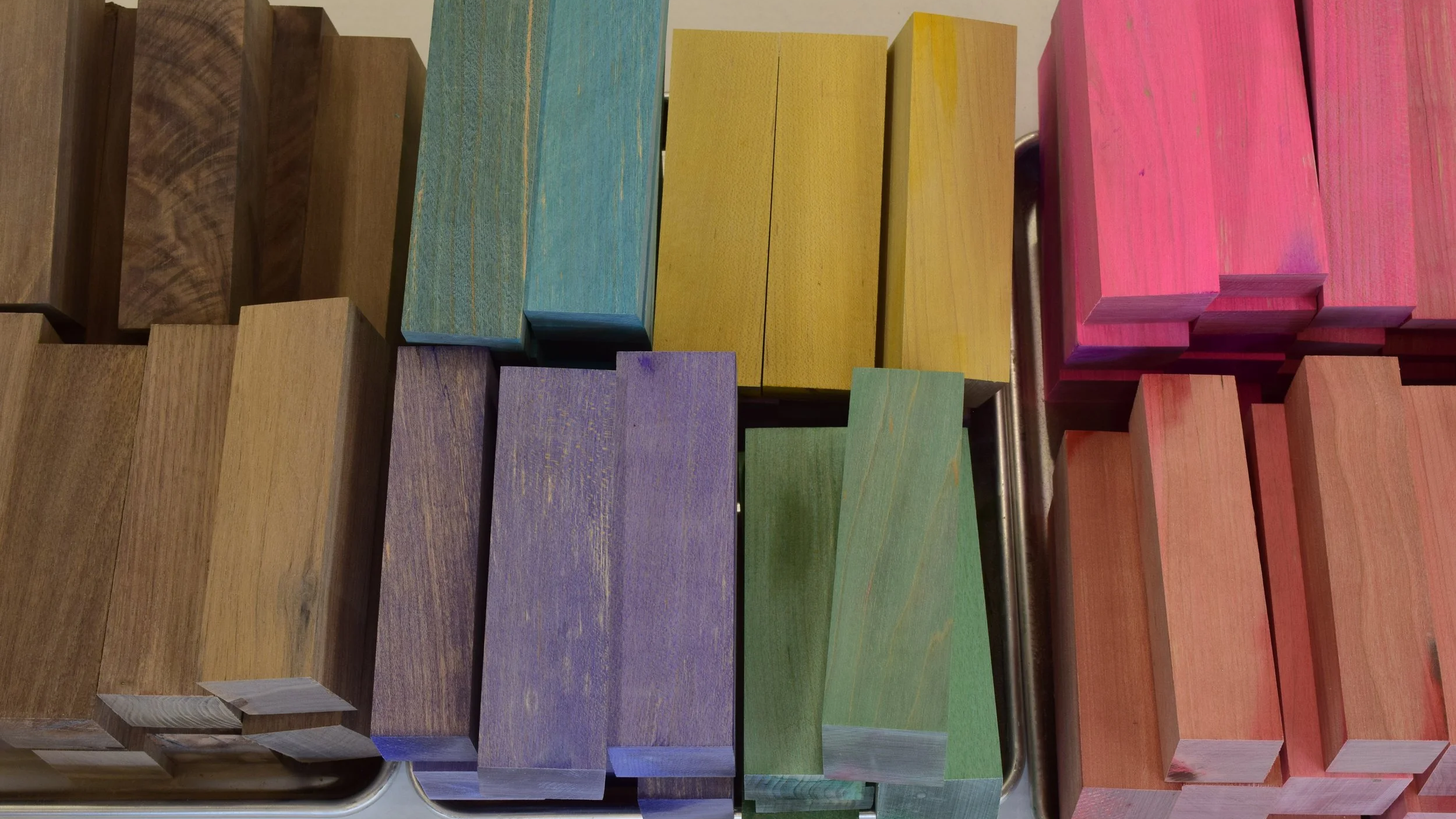
At RMS Woods, our wood stabilization begins with precise kiln drying to condition the raw materials optimally. Selected wood blanks, such as walnut, cherry, or hard maple, are placed in a controlled kiln where environmental parameters are meticulously managed to reduce moisture content to near 0%, typically achieving an equilibrium moisture content below 1%. This essential dehydration phase enhances the wood's porosity, preparing the cellular structure for resin impregnation while minimizing risks of cracking or distortion, ensuring a stable foundation for the subsequent steps.
Following drying, the blanks are transferred to airtight containers for a cooling and relaxation period, allowing them to reach ambient temperature in an anaerobic environment. This prevents moisture reabsorption and alleviates internal stresses from the drying process, promoting structural integrity. This is followed by vacuum application at 26 inches of mercury (approximately 88 kPa absolute pressure) until degassing is complete, as indicated by the absence of bubbles, which evacuates air from the porous matrix to facilitate deeper resin penetration.
The process advances with an additional 24-hour soak for impregnation to ensure thorough saturation of the methacrylate ester monomers into the wood's vascular and interstitial spaces. Culminating in a controlled thermal curing over 4 hours in a convection oven, the resin polymerizes into a reinforcing cross-linked matrix, enhancing mechanical properties. After curing, the blanks cool for 24 hours before light abrasive sanding removes any surface residuals, yielding durable, high-performance stabilized wood ready for artisanal applications.